Why Do Dolphins Come to Fishing Nets? Scientific Explanations and Solution Guide for Fishermen
Why Do Dolphins Come to Fishing Nets?
There is a common problem that almost everyone who is engaged in fishing has experienced at least once.
You set sail before sunrise in the morning and leave your net. When you start collecting the net hours later, everything seems normal in the first meters. A few minutes later, you notice tears, broken ropes and missing fish in certain parts of the net.
On the boat, the same phrase is often heard:
> "The dolphins are here again."
But why really?
Why do dolphins turn to fishing nets in particular?
Are they tearing the nets apart on purpose?
Or is there a completely natural behavior behind this?
In this article, we will discuss the answers to these questions both scientifically and in line with the experiences of fishermen in the field.
Ingredients
- Why do dolphins approach nets?
- How do dolphins find fish?
- Why are nets damaged?
- Do dolphins target the net or the fish?
- Which areas have a higher risk?
- How can network damage be reduced?
- How can Dolpinger technology help in this process?
- Frequently asked questions
Dolphins Look for Easy Prey, Not Nets
Dolphins are highly intelligent and opportunistic hunters.
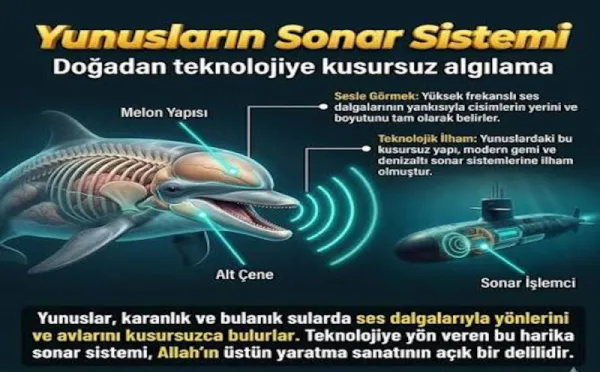
In their natural habitat, they roam large areas, move in schools and use a biological sonar system called echolocation to find fish.
A fishing net can be an unexpected advantage for them.
Because the fish caught in the net can no longer escape.
This means an easily accessible food source for dolphins.
Therefore, in most cases, the target is not the net, but the fish inside the net.
Echolocation: The Natural Radar of Dolphins
Dolphins do not perceive their surroundings with their eyes alone.
Their main strength is echolocation.
It sends high-frequency sound waves from the head area, analyzing the return of these waves from objects;
- the location of the fish,
- size,
- movement,
- direction,
- even intensity
they can perceive.
Thanks to this feature, they can even hunt in murky waters.
However, fish trapped in a fishing net become targets much more easily than natural shoals.
Why Do Nets Tear?
Many people think that dolphins deliberately tear the net.
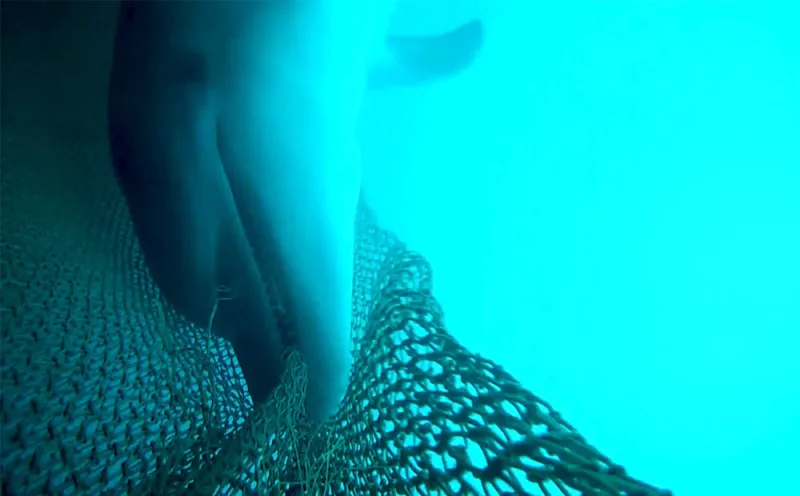
In reality, the damage is often caused by the physical strain that occurs when trying to retrieve the fish.
Yunus;
- tries to attract fish,
- pushes the net,
- grasps the fish with his teeth,
- puts pressure on the mesh with his body.
In the meantime, breakage can occur, especially in old or worn meshes.
So the cause of damage is often not direct attack, but feeding behavior.
Economic Implications
A net damage is not just the cost of repair.
At the same time;
- lost prey,
- extra fuel consumption,
- additional repair time spent at the port,
- labor cost,
- disruption of the hunting plan,
- Shortening of network life
It produces chain results such as.
Especially for fishermen who regularly fish in the same area, these losses can translate into significant costs at the end of the season.
Situations Where the Risk Is Higher
Not all regions have the same level of dolphin interaction.
Some factors that may increase the risk include:
- Coasts with a large dolphin population
- Nets left at sea for a long time
- High amount of fish in the net
- Migration periods
- Regular hunting routes
Therefore, the experience of each boat may be different.
What solutions have fishermen tried so far?
Different methods have been applied over the years.
For example;
- changing the mesh location,
- using thicker mesh,
- to check more often,
- Trying different hunting hours.
Some methods may be beneficial in certain conditions.
However, as technology has evolved, more systematic solutions have emerged.
Acoustic Pinger Technology
Acoustic pinger systems are electronic devices that are installed in fishing nets at regular intervals.
These devices generate audio signals with specific characteristics.
Purpose;
It is not to scare dolphins.
Purpose;
It is to help dolphins perceive the area where the net is located earlier.
With proper planning and appropriate use, this approach can contribute to reducing direct contact with networks.
The Dolpinger Approach
Dolpinger is one of the acoustic pinger solutions developed for professional fishermen.
The main objectives of the system are:
- Helping to reduce network damage
- Supporting the lifetime of networks
- Contributing to reducing operational losses
- Making the interaction between fishing activities and marine mammals more manageable
Dolpinger's activity; The right product selection depends on proper installation, maintenance and usage conditions.
Conclusion
Dolphins do not move with the intention of damaging fishing nets.
Their aim is to reach the food they can easily access.
This natural behavior can cause significant economic losses for fishermen.
The negative effects of this interaction can be reduced through proper equipment selection, regular network maintenance, and the use of appropriate technologies.
Acoustic pinger systems such as Dolpinger are among the modern solutions developed for this purpose.
Frequently Asked Questions
Why do dolphins come to fishing nets?
Because fish trapped in the net create easy prey.
Do dolphins tear the net on purpose?
The damage is mostly caused when trying to pick up the fish.
Does every fisherman experience the same risk?
Factors such as region, season, net type, and dolphin density affect the risk.
What is an acoustic pinger
It is an electronic system mounted on fishing nets that aims to help dolphins spot the net more easily.
Which anglers is Dolpinger suitable for?
It is one of the solutions that can be considered for coastal and commercial fishing users who experience dolphin-induced net damage.